Jan 24, 2021 | Homily
By Fr. Marcel Uzoigwe, CSSp.
(Jonah 3:1-5,10, Ps.24:4-9, 1Cor.7:29-31 & Mk. 1:14-20)
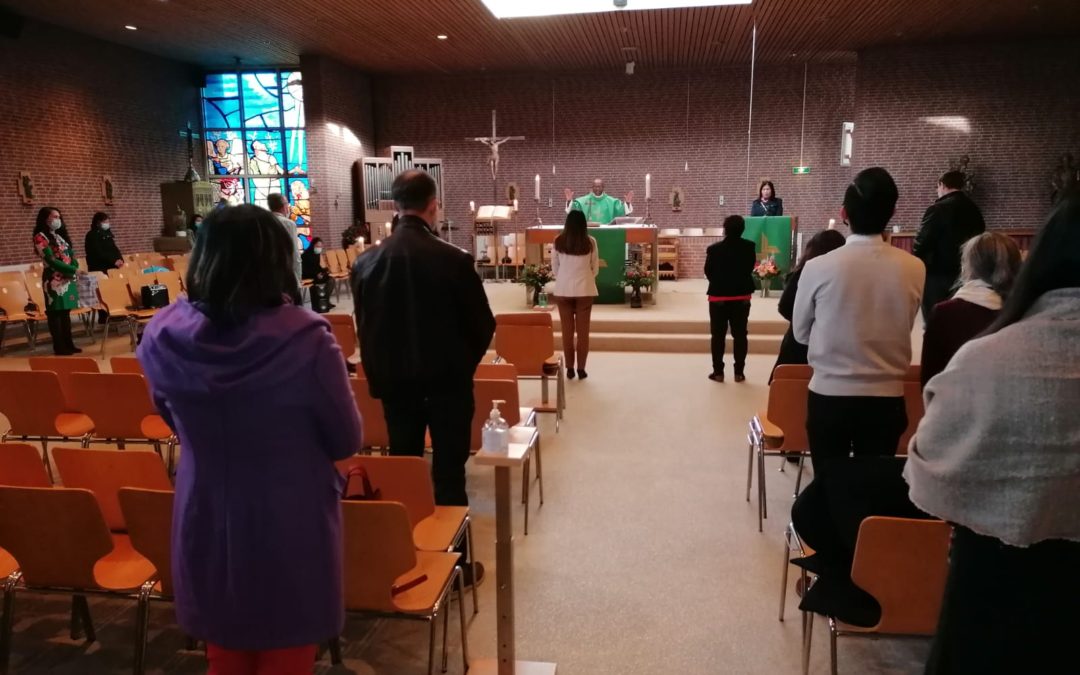
Today we celebrate the Sunday of the word of God. The Holy Father, Pope Francis, announced on September 30, 2019, which was the liturgical memorial of St. Jerome, that the Third Sunday in Ordinary Time would be celebrated as the Sunday of the Word of God. His Apostolic Letter, “Aperuit illis: Instituting the Sunday of the Word of God” reads in part, “It is fitting, then that the life of our people be constantly marked by this decisive relationship with the living word that the Lord never tires of speaking to his Bride, that she may grow in love and faithful witness. Consequently, I hereby declare that the Third Sunday in Ordinary Time is to be devoted to the celebration, study, and dissemination of the word of God.” This apostolic letter emphasized the importance of the word of God in the life of the Church, detailing its richness. It went on to recommend the various ways the word of God can be brought to life, celebrated, and deepened in the life of the faithful. The Scripture is, indeed, central to the life of the church. The readings of today concentrate on the power of the word of God to bring a change to our lifestyle.
The first reading deals with the call of Jonah to preach repentance to the people of Nineveh. It begins as follows: The word of the Lord came to Jonah, saying: “Set out for the great city of Nineveh, and announce to it the message that I will tell you.” This implies that the command to preach to the Ninevites is a command from the Lord communicated to Jonah through the word of the Lord. More importantly, Jonah is to announce only the message that the Lord gave, and not his own message. What is to be preached must emanate from the Lord, who commands. Preachers are not to preach their own ideology, but the truth that sets free. The power of the word of God is greater and above the idiosyncrasies of the preacher. This fact is seen in both the refusal of Jonah to go and in the immediate repentance of the people of Nineveh at the preaching of Jonah.
Ordinarily, one expects that Jonah would be happy to see the people he preached to repent. But the converse was the case, simply because the people of Nineveh were considered enemies of Israel. The human desire for vengeance created an obstacle to Jonah accepting the call of God to take his word to them. When he was eventually forced to go, he did, hoping that they would reject his preaching. That explains why he was expecting to see the country destroyed, even after delivering the message of repentance, and becoming angry when God decided to forgive the people of Nineveh (cf. Jonah 3:10; 4:1, 10 -11).
The word of God embodies the very wish of God for his people to repent and return to Him. It is never the will of the Father that any of his little children get lost (cf. Matthew 18:14). The failure of Jonah to rejoice in the conversion of the Ninevites is contrasted with the genuine preaching of repentance that ushered in the ministry of Jesus. It is a call to repentance and to believe in the Good News. The themes of repentance and believing in the Good News summarise the demand of God on the part of his people. God expects us to accept his word like the people of Nineveh and allow it to transform us, aligning our lifestyle to its principles. This is so important that Jesus had to recruit and train his disciples to carry on with this divine project in every generation. We see the call of the first disciples in the Gospel reading; a call that resulted in their change of profession. One striking characteristic of those called is their readiness to “leave everything” to follow Jesus. It is a sign that they considered the message of Jesus as overriding every other thing. Otherwise, they would not give up their livelihood to follow Jesus, especially at such a time that he was considered a poor itinerant preacher by many of his contemporaries.
The word of God calls us to repentance and to believe the Gospel. Repentance is about letting go of whatever is holding us back and pulling us down. Things that are keeping us away from God. The Bible calls them sin because they are offensive to God, but more importantly because they constitute an obstacle to our being united with God. Letting go is a means of growth and advancement toward our real self: the image, and the glory of God. The Greek word for repentance, metanoia (μετάνοια), meaning “after-thought or beyond-thought”, is commonly understood as “a transformative change of heart; especially as a spiritual conversion”. Repentance is the first step to action to which the word of God calls us. The urgency of repentance is echoed in the First Letter of Paul to the Corinthians (1 Cor 7:29-31) that forms the second reading. He was direct in pointing out that “the time is running out.” It is vital that we put our priorities right because the world in its present form is passing away.
Repentance is not just for its own sake. Otherwise, we would constantly relapse to the very things from which we repent. Repentance serves to turn us away from the direction of death and destruction so that we can walk toward life and joy in God; to turn away from darkness to light. The component of repentance is acceptance of the Good News of salvation. The Good News is God’s divine plan for humanity and the very reason for the incarnation, death, and resurrection of Jesus Christ. By accepting the Gospel, we commit ourselves to live according to its principles.
As we celebrate the Sunday of the word of God, it is important to reflect on what role the word of God plays in our daily lives as Christians. This celebration is meant to revive the attention we should pay to the daily devotion of reading and reflecting on the word of God in the Bible. God speaks to us in his word. As St. Jerome is quoted to have said, “Ignorance of Scripture is ignorance of Christ.” I pray that we make the word of God the center of our Christian inspiration and the reference point of our lifestyle.
Dec 29, 2020 | Homily
By Fr. Marcel Uzoigwe, CSSp. | Sir 3:2-6.12-14; Psalm Ps 128; Col 3:12-21; Lk 2:22-40
Dear brothers and sisters in Christ,
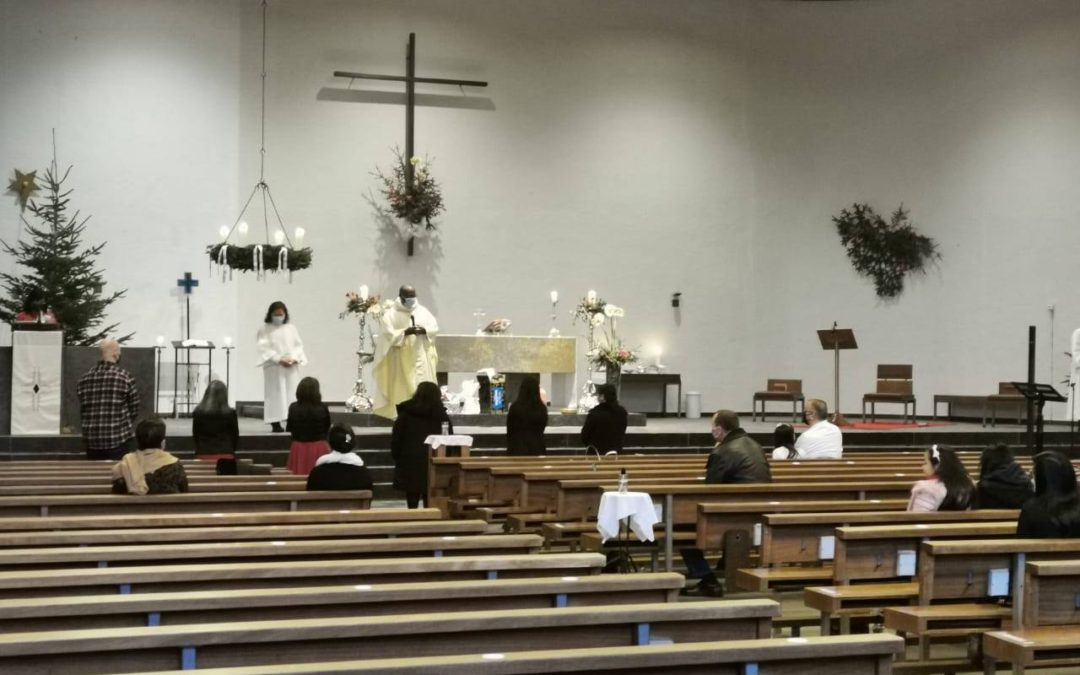
Today we celebrate the holy family of Jesus, Mary, and Joseph. The readings focus on family life and what is necessary for a family to live in love and faithfulness. The gospel reading presents the Holy family as an edifying example of a young family fulfilling the demands of God’s law. The scene describes the presentation of Jesus in the temple, which is the fulfillment of the law given to Moses concerning every firstborn male (Exodus 13: 2). The event quickly became an occasion for the revelation of the salvific mission of Jesus. His parents were genuinely surprised by the prophecy of Simeon concerning Jesus: a child set for the rise and fall of many in Israel, and for whose sake a sword will pierce the heart of his mother.
The obedience of the holy family to the divine command grounds the reflection on family life. Every family that worths the name is founded on eternal values and principles that are rooted in the law of God because God is the ultimate founder of families when he created Adam and Eve. Just as the manufacturer of products, knowing how best to operate and maintain the products for maximum efficiency and long duration, puts down the instruction in a manual for the prospective users, God described, in his laws, the process whereby families he created could live happily. Psalm 119:1-2 states that obedience to the law of God is the guarantee of happiness. The family of Adam and Eve hit the rock due to disobedience to God’s command.
The first reading from Ben Sirach describes what obedience to God implies in the context of the relationship between parents and children. Today’s reading is an excerpt from a longer section (3:1-16) of his work concerning parenting and the honor due to parents. Ben Sirach considered the obligation to honor one’s parents to be an integral part of the life of faith. True love of God, in all its implications, necessarily involves love to others, most of all to parents. Without honor to parents, one cannot claim to honor God because biblical ethics is grounded in honoring father and mother. Exodus 20:12 records honor to parents as the only commandment that has a promise attached to it, and Moses reiterated this very important command in one of his last speeches to the Israelites in Deuteronomy 5:16. It reads, “Honor your father and your mother, as the LORD your God has commanded you, so that you may live long and that it may go well with you in the land the LORD your God is giving you.”
Ben Sira built his teaching on the ancient belief that honor to parents brings long life, the forgiveness of sins, and other blessings. Given that the family bonds endure throughout life, Ben sira saw no reason for the obligation of honoring parents to be related even when the parent had grown old, forgetful, feeble, and/or senile. Children are, in some way, an extension of something about the parents (the DNA) and a prolongation of the family tree. Failure to honor one’s parents amounts to hurting the very channel of life and history.
Given that family is the resting ground where values and virtues are inculcated and cultivated, healthy families are essential to the well-being of society. The second reading details the values that aid cordial relationships in a family. Paul noted in this letter to the Colossians 3:12-13 that heartfelt compassion, kindness, humility, gentleness, and patience, bearing with one another and forgiving one another are important attitudes that should govern relationships. We know how difficult it can be sometimes, given that we are different in our characters and temperaments. Issues of carrier building, economic hardship, and conflicting interests sometimes exact pressure on the family. The societal values and demands also challenge families in this modern age. Besides, the desire for independence and freedom has also led to radical individualism. Yet the crises all around us remind us that we need each other. We do not only need independence but also interdependence, we need not only freedom but also co-responsibility. We not only need development and progress, but also compassion, love, understanding, and forbearance. The Holy Family teaches us that everyone in the family, even the so-called black sheep, is like a piece in a puzzle without which it cannot be solved.
Everyone contributes something unique to keep the family running. Both the tangible and intangible contributions from every member of the family are essential for a happy home. Jesus had to incarnate in one of the lowliest families to teach us that wealth, status, positions, and all that the world pursue are not necessary to make a happy family. The holy family also teaches us that functions in a family are only different in forms but not in value. We can better appreciate this fact by considering the roles played by Joseph, Mary, and Jesus. Then we can discover how important and protective it was for Joseph to accept Mary’s pregnancy which otherwise would have resulted in her death. The same goes for Mary’s role and that of Jesus in human salvation.
Today, we can as well look beyond our nuclear families to reflect on our community as a wider family of the children of God. The diversity of functions, characters, temperaments, and sensitivity is an indication that we all need to take a closer look again at the second reading if we are to have a cordial, respectful, and caring FCC-Gouda of our dream. If the virtues of heartfelt compassion, kindness, humility, gentleness, patience, bearing with one another, and forgiveness are important for the nuclear family, how much more essential is it for the bigger family like ours.
Let us pray for a better understanding and appreciation of every family member, and pray for God’s wisdom and guidance in our relationship with one another. Amen.
Nov 22, 2020 | Homily
By. Fr. Marcel Uzoigwe, CSSp.
(Ezk.34:11-12,15-17, Ps.23, 1Cor.15:20-26,28 & Matt.25:31-46)
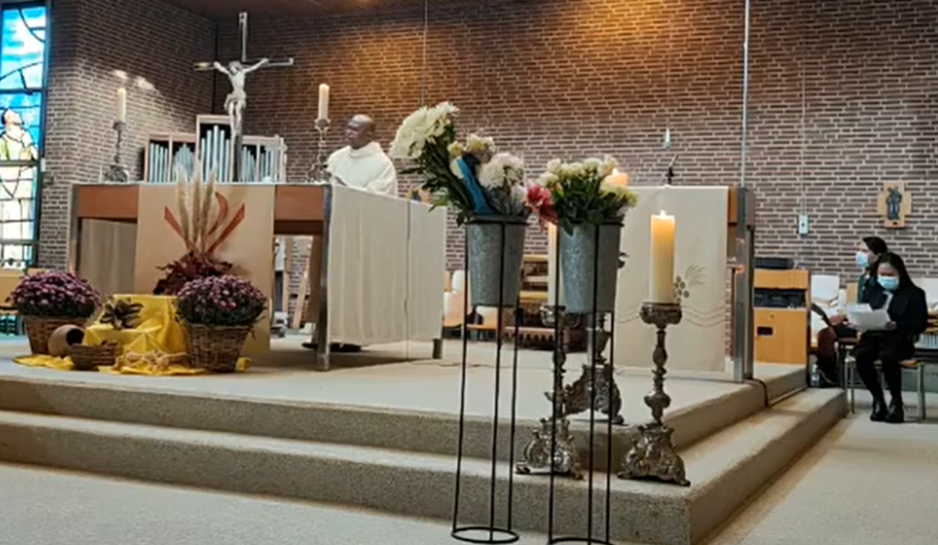
This Sunday, which is the last of the Thirty Four Sundays of the Church’s liturgical calendar, celebrates the Solemnity of Christ the King. The Lord has graciously been leading us through the ministry of his word and sacraments. The reading of today presents us with the scenario of how it will be when Christ, the King of the Universe, will come again in glory to gather his people.
Right from the first book of Samuel when the Isralites requested for a king and God gave them King Saul, God entrusted the leadership of his people to the various kings of Israel and Judah. But they became disappointing and oppressive, neglectful, and even exploited the people. In the first reading, the prophet Ezekiel announced God’s decision to take over the leadership of his people since those appointed have failed to provide the needed form of leadership. God would be like a shepherd to his people, going to seek the lost like a shepherd seeks the lost sheep where they are scattered, bringing back the strayed, binding up the crippled, and strengthening the weak. But there will be consequences for the oppressors and exploiters among his people. This judgment will also be executed at all levels of relationships that exist among his people. Thus, God will not only separate the oppressed from the oppressors as a shepherd separates sheep from goat, but will also judge between sheep and sheep, rams and he-goats. This brings us to the idea of the king as the judge on the last day, as described in the Gospel reading.
Jesus took up this point in the gospel passage when he talks about separating people one from another as a shepherd separates the sheep from the goats. He gave the criterion for the separation and judgment as based on how much one has loved God and neighbor. The passage reveals that this will be a great separation. The King will separate humanity into two like a shepherd does with his sheep and goats; one on his right and the other on his left. He will tell those on his right to come into his kingdom prepared for them from the beginning because they were able to see Him in the needy (the hungry, the thirsty, the stranger, the naked, the sick, those in prison, etc) and come to his help. Conversely, he will order those on his left to go into the hellfire prepared for them because they neglected to see Him in the needy and so failed to come to His help. Jesus went on to emphasize that whatever we do or fail to do to anyone, even the least person on earth, that, we do or fail to do it to him (Mtt.25:40,45).
Jesus, invariably, teaches in this passage that we should see and love him in every human being. If we recall that the Genesis account of creation has it that every man and woman is created in the image of God (Genesis 1:27), it will be easier to understand that everyone is a perfect expression of God on earth. Consequently, no one who loves God will hate his or her neighbor and no one who hates God will love his or her neighbor. That is perfectly explained by the first two great commandments: love of God, and love of neighbor. “On these two commandments hang all the law and the prophets” (Matt 22:35-40). It is, therefore, not so much about speaking for the poor but about doing so out of love for God. This teaching has inspired many saints like St Theresa of Calcutta (Mother Theresa) who virtually sees the face of Jesus in every human person in need and reaches out to them, irrespective of tribe, color or religion.
There is a new dimension that Jesus added to the separation that the prophet Ezekiel spoke of in the first reading, and it is very important to take note of it. Those who were condemned to hell by the King in the Gospel story were not necessarily sentenced because of evil things they committed (sins of commission) but rather because of the good things which they neglected to do. We call it sins of “omission”. Perhaps they did avoid doing negative things. However, in the end, they were still found wanting because they neglected or failed to reach out to the situation around them that calls for their compassion, help, and service. Indifference to the cry of the needy is indifference to Jesus (what you did not do for one of these least ones, you did not do for me, Matthew 25: 45). Taking a look at the life of Jesus while on earth, we could see that Jesus is the one that often went out of his way to teach the ignorant, feed the hungry, heal the seek and drive out the devil. Act 10: 38 notes “how God anointed Jesus of Nazareth with the Holy Spirit and with power, who went about doing good and healing all who were oppressed by the devil, for God was with Him.” That is the same leadership that God expects from each of us, filled with the Holy Spirit.
In today’s society, it is easy to maintain blind eyes over a needy situation without feeling guilty. We can easily exonerate ourselves by arguing that it is the responsibility of this or that government agency to take care of it. We know that there are government policies concerning the poor in society, and there are agencies responsible for carrying out the recommended tasks. However, we also know that there are many needy people around us and that there are many ways to help them if we really want to. Logical self-exoneration does not help in this situation. Where there is the will, there is always the way. Worse still, it is easy to exonerate and commend ourselves presumptuously that we are not like the rest of ungodly men who commit grievous sins. By this, we tend to forget that, the avoidance of evil act, while at the same time remaining indifferent to doing what is good and challenging what is evil, contradicts the law of love and the Christian attitude of holiness, because holiness is all-encompassing.
Since holiness is not just the avoidance of evil acts but also about reaching out to others in need and doing what is good as Jesus would, the readings invite us to sharpen our sensitivity to people and events around us. The Jesus we are seeking is already among us in various forms: as a needy person, challenging situation, and opportunity to do good. These are the areas on which the last judgment will be based. Being sensitive and responsive to a situation that calls for one’s help is a noble and unique virtue; the type that enables one to identify and respond to a situation without waiting to be begged. St Paul gives us a rule of thumb on this point. He said, “As for you, brethren, do not grow weary in doing good. (2Thess3:13). St James even puts it in a more challenging way, “So whoever knows the right thing to do and fails to do it, for him it is sin” (Jam 4:17).
Let us always remember that, when the roll is called on the evening of our life, we shall all be examined on the law of love. Our Lord, the Universal King spells out today this law of love in pragmatic and concrete actions like feeding the hungry, giving water to the thirsty, accommodating the stranger or the neglected, clothing the naked, caring for the sick, and visiting those in prison. Certainly, these are not to be taken as an exhaustive list. Rather, it only serves us to develop the underlying Christian attitude of active concern to those around us who are in any form of human, material, or spiritual need. Jesus assures that every sensitivity and constant positive action in the face of every needy situation will be highly rewarded. But he also warns that any act of omission, neglect, or indifference to situations that call for our Christian service would attract the King’s blame on that great day of separation. The choice is, therefore, clearly laid out.
As wise children of God, let us choose to serve God in our neighbors because, as St John of the Cross said, ‘At the evening of our life, we shall all be examined on the law of love’.
Oct 25, 2020 | Homily
By Marcel Uzoigwe, CSSp.
(1st reading: Dt 8:2-3.14-16; 2nd reading: 1 Cor 10:16-17; Gospel: Jn 6:51-58)
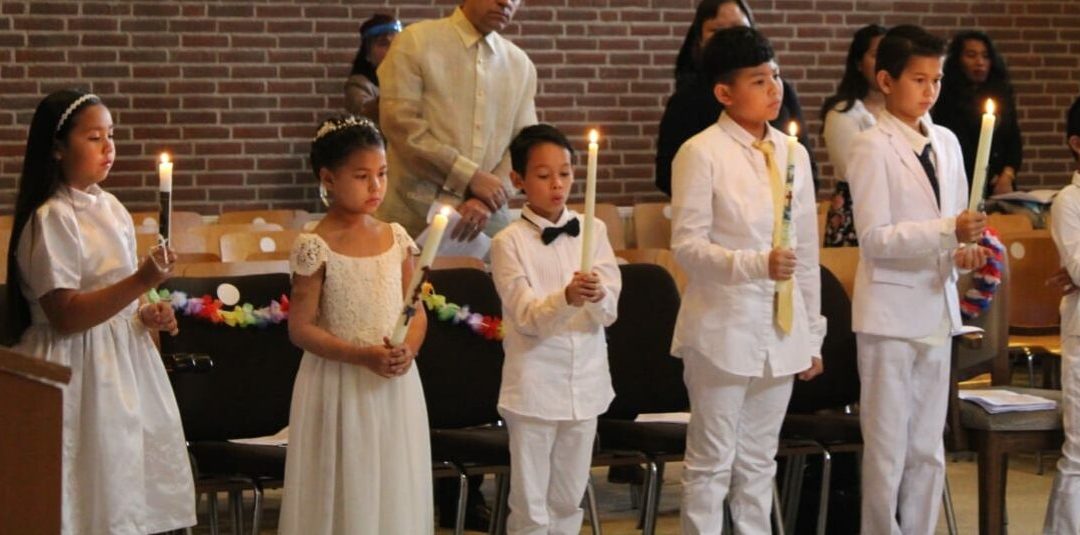
We gather today to celebrate with our beloved children who are to receive the Holy Eucharist for the first time. The readings concentrate on the events of God feeding his people with spiritual food to strengthen them in their journey on earth.
The first reading recounts the experience of the Israelites on their way to the promised land. At some point on their journey through the desert, they ran out of food and provisions because the food they had brought out of Egypt had run out. They cried to God, who came to their rescue by sending them manna (Exodus 16:4). The word manna in Hebrew simply means “what is it” because the Israelites did not understand what it was when they saw it for the first time. Moses had to explain to them that it was the food God sent to sustain them. Manna is also known as the bread from heaven. The manna which the Israelites ate in the desert is considered a supernatural food that God provided for his people. They survived on the strength of this food during their 40-year wandering in the desert. They continued to eat the manna until the day after they ate the fruit of the land of Canaan. Then the manna ceased (Joshua 5:12).
Moses recounts this experience to reassure the people that God will always provide for them, even by extraordinary means, so long they remain faithful to them. God is a loving father who cares for his children. He never leaves us unattended. As a matter of fact, he foresees our needs and plans ahead for our benefits. All that God requires of us is faithfulness to him. He knows each and every one of us, our strengths and weaknesses, desires and aspirations, hopes and fears, and indeed our purposes and goals in life. Faithfulness keeps us united with God who carries our burdens and sorrows (Isaiah 53:4), giving us the strength for life’s journey.
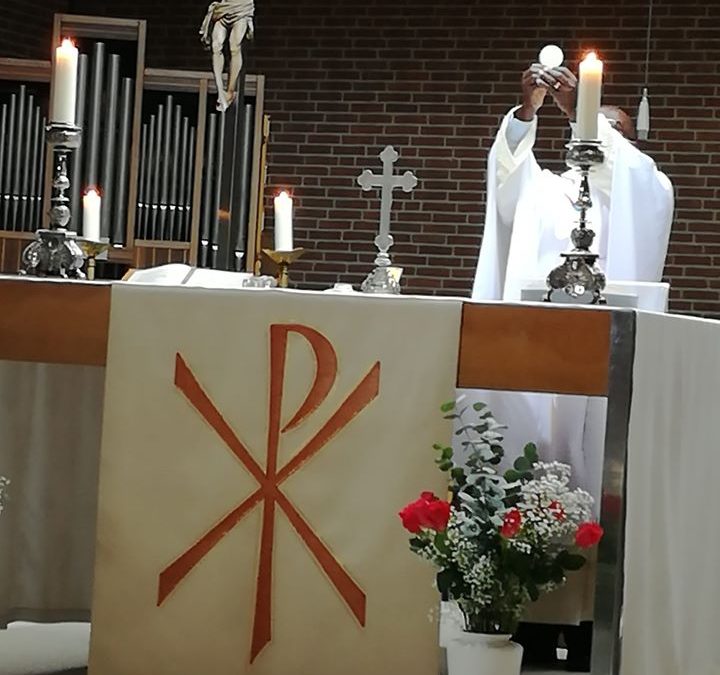
But God does not just want to be there, next to us. He wants to be one with us; he wants to be united with us. We read in John 3:16 that God so loved the world that he gave his only Son, that whoever believes in him shall not perish but have eternal life. There are many ways to show one’s love and care for the other. One can give tangible materials things like gifts and flowers. That is an easy one. There are also intangible gifts like time, attention, good advice, rendering help and services, and so on. But when one offers his or her own self for the sake of the other, then it is something on the high side. It is a sign of total dedication. The self-giving of Jesus transformed the human person laboring under the pain of sin, which Paul connects to the bondage of the law (Galatians 4:4-5). Jesus taught the love of the Father and brought that love to completion in the offering of his life on the cross. We know that Jesus did away with the consequences of sin that hung on the fallen humanity by his self-sacrifice on the cross. But he did more than just that. On the night before his crucifixion, Jesus instituted the Holy Eucharist that is his true Body and Blood and gave to his disciples (Matthew 26:26-27). That was when they received the Body and Blood of Jesus for the first time, just as you are going to do today.
Why does Jesus give us his Body and Blood? This question has been asked again and again. Even the Jews in today’s gospel had a similar question. But the answer is not far-fetched. Jesus gave the only accurate answer: “whoever eats my flesh and drinks my blood remains in me and I in him.” Receiving the body and blood of Jesus is surrendering our entire self to God so that he can reign in our lives. Jesus is the way, the truth, and the life. He comes to walk with us on the path of life, to teach us the truth about the Father, and to give us life eternal. He simply wants to be part of everything that goes on in our life. When we receive him worthily in the Eucharist with faith and devotion, he becomes for us the source of strength, taking away all fears. Little wonder the bible says this about the children of God in 1 John 4:4: “Little children, you are from God and have overcome them, for he who is in you is greater than he who is in the world”. So, when Jesus warns the Jews in the gospel reading that unless they eat of his body and drink his blood, they do not have life within them, he is assuring them that eternal life is in him, and whoever fails to get united with him is lost.
Beloved children, today you join other Catholics all over the world to respond to this invitation of Jesus to be one with him in the Holy Eucharist. Paul reminds us in the second reading that though we are many, we share in the one bread – the Christ, indicating that we are united in the one body. Whoever, therefore, shares in the one bread is called upon to preserve the unity of the children of God, in the one love that joins us together. We need to live in the power and love of Jesus Christ who has become one with us. We have to give ourselves over to Jesus Christ and allow him to manifest his glory through us to all people around us. How do we do that?
We do that by letting every part of us to glorify God. Let our hands serve as if Jesus was serving; let our mouths speak words of goodness and care as Jesus would; let our minds think wonderfully good things that will make the world a better place like Jesus did; let the people around us experience Jesus through us. By receiving the blood and blood of Jesus, we have become ambassadors of Jesus. We are his image and likeness.
There is this short prayer that captures the response Jesus wants from us as we receive Him in the Holy Eucharist. It is not just a response that we verbally give, but something that we must translate into action. It goes this way:
Jesus, I love You
All I have is Yours
Yours I am and Yours I want to be
Do with Me whatever You will.
We pray that today will be the beginning of a more glorious life for you and your family. Congratulations on your first holy communion.
Sep 28, 2020 | Homily
By Fr. Marcel Uzoigwe, CSSp
(Ezk.18:25-28, Ps.24, Phil.2:1-11 & Matt.21:28-32)
Dear friends in Christ,
We are conversant with such sayings as these: A man’s worth is not measured by what he says but what he does; Talk is cheap; Making promises is not the same as fulfilling them; Action speaks louder than words, and so on. Such sayings point to the fact that for a speech to be meaningful and effective, it needs to be put into practice. We are also conversant with so many sayings about change, especially the famous saying by the Greek philosopher, Heraclitus, that “The only thing that is constant is change.” Whether we talk about change or about actions, one important component that determines the effect of the change or action is its direction. A person’s action can change either from a negative direction to a positive direction or vice versa. Whichever direction a person decides to focus his action determines the person’s destination, goal, or end.
The Christian life is not shielded from this reality. We are either moving forward, growing in our faith and Christian practice or we are moving backward and losing out on the great vocation that cost the life of Jesus on the cross. Similarly, it is becoming common practice to identify with the Church, publicly profess the faith, only to turn away from it. The readings of today warn that God assesses people based on their present actions, and therefore demand change of heart to focus on living the teachings of Jesus in the present. They re-echo the closing words of Jesus on his ‘Sermon on the Mount’ when he said, “Everyone then who hears these words of mine and does them will be like a wise man who built his house on the rock.”(Matthew 7:24).
Prophet Ezekiel warns, in our first reading, that “If a righteous person changes his mind and turns away from righteousness and commits sin, he dies because of his sin. While on the other hand, if a wicked person turns away from the sins he commits and does what is good and right, he will save his life.” In other words, the punishment for sin is the poison of the sin itself. Our selfishness, for instance, begets distressing isolation. And, as a violation of our life-giving relationship with God, sin begets nothing but pain and loss. Thus, it is not God that punishes the sinner; the punishment for sin is self-inflicted. When we have a change of heart and repent, God does not keep a record of our past. That’s why a convicted criminal who made a last moment act of faith got the promise of paradise (cf. Luke 23: 40-43). What matters in life therefore is not how we started but where we are at the present and how we finish. Yet, a person’s final choice is essentially not random. It has a history. During our entire life, we are consciously or unconsciously making choices that shape us or dispose us to be molded into a particular shape that only comes to full expression at the end.
This prophetic warning is invariably based on the possibility of changing one’s values in life. The famous philosopher, Socrates, is credited with the saying that “The unexamined life is not worth living”. This reading invites us to examine which direction our life is going and to determine if there is a need for change in direction. Self-examination is not something to be taken lightly given the scriptural warning in Proverbs 14:12 that “there is a way that seems right to a man, but its end is the way to death.” Thus, objectivity, but also regularity, are essential elements to fruitful self-reflection. That is one of the reasons that the Church begins most of its liturgical prayers, especially the celebration of the Holy Eucharist with penitential service which gives us the opportunity to examine our lives, ask for forgiveness and resolve to move in the right direction as God desires of us.
Jesus extended this call for a change of heart, for repentance, in the gospel reading with a parable. In this parable, a man had two sons. He came to the first and said, ‘Son, go out and work in the vineyard today.’ He said in reply, ‘I will not,’ but afterward changed his mind and went. The man came to the other son and gave the same order. He said in reply, ‘Yes, sir,’ but did not go. And Jesus asks, ‘Who among the two sons did his father’s will? Certainly, it is the first one who carried out what the father wants of him, even though he had earlier objected but he later changed his mind and obeyed his father.
The first son exemplifies the action of God’s grace (which is continually extended to us) and human nature (original sin) which makes us lean towards selfishness. Change or having a rethink is the fruit of cooperating with that grace. On the other hand, the son who says “yes” and does nothing represents those who knew God and followed Him to a certain extent before dropping out. In the time of Jesus, these were the those that did not accept him as the Messaiah, as the fulfillment of the la wand the prophets. That was the religious establishment, the chief priests, and the elders of the people. Rather than the deep and personal conversion to which Jesus calls all, their religious behavior and relationship with God was usually self-serving and superficial, reduced to observing rituals and rules. Jesus concludes that the tax collectors and the prostitutes are finding their way into the kingdom before the self-righteous priests and elders.
The point Jesus makes in this parable is quite clear. Good intentions and promises don’t actually count unless they are carried out or kept. A person might say “Yes” to God and later lose his soul by disobedience. On the other hand, a person might say “No” to God, but later save his soul by repentance and act of obedience. Obviously, when the roll is called at the end of the day we shall all be examined on our actual obedience to what the Lord wants of us and not on our mere ‘Yes’ and promises to obey the Lord which never came true. Like the prophet Ezekiel said, “When someone virtuous turns away from virtue to commit iniquity and dies, it is because of the iniquity he committed that he must die.” It is the action that kills. And since every action begins as a thought in the mind, St. Paul earnestly admonishes us in the second reading to be of the same mind, with the same love, united in heart, thinking one thing.
St. Paul’s appeal touches on the very things that cause problems among people and eventually tempt mankind to walk away from God. Hear what he says: “Do nothing out of selfishness or out of vainglory; rather, humbly regard others as more important than yourselves, each looking out not only for his own interests but also for those of others. Have in you the same attitude that is also in Christ Jesus.” Paul understands the essence of conversion from personal experience. He was brought up in the strict religious practice of the Pharisees. So conversion for him was not just a mere emotional feeling but a deep change in everything: value system, commitment, direction, and goal of life. He found the life of Jesus as the only thing worth imitating such that he was bold to write in 1Corinthians 11: 1 “You are to imitate me, just as I imitate Christ.” The commitment of Jesus to his teaching, his humility up to the point of dying on the cross for those that even rejected him, are some of the things that strengthened the effect of Paul’s personal encounter with Jesus on the road to Damascus (Acts 9).
Dear friends in Christ, Paul realized that the only way to fully commit to Jesus is by a conversation of the whole person that involves a deep change of mind. He set himself to work to become such a great apostle and recommend such renewal of mind to everyone who wants to do the will of God (cf. Rom. 12: 1-2). The same call for such transformative change in one’s way of life resounds in the three readings we have today. Lets, therefore reconsider our promises and professions of faith in the light of our present life situations and see what necessary changes and renewals we need accomplish the will of God for us. Let us, therefore, pray for the grace to heed this divine invitaion. Peace be with you.
Aug 23, 2020 | Homily
By Fr. Marcel Uzoigwe, CSSp.
(Is.22:19-23, Ps.138:1-8, Rom.11:33-36 & Matt.16:13:20)
Beloved friends in Christ,
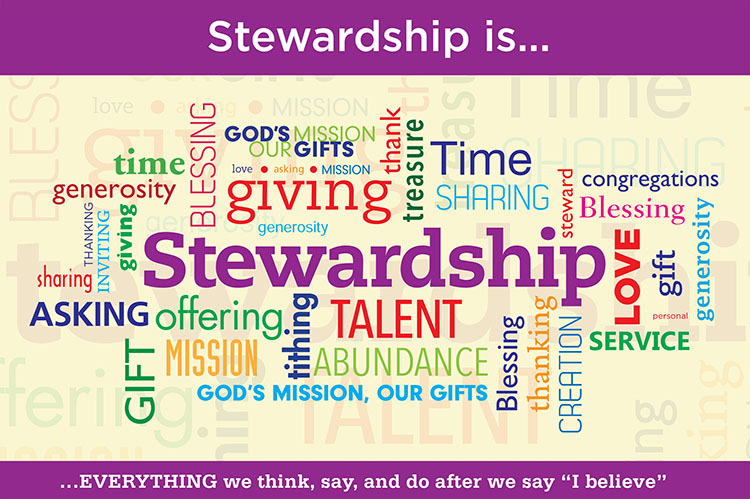
The readings of today invite us to review the basic foundation of our stewardship. This is necessary given that stewardship in God’s household is a vocation. God calls and choses us for various functions in the body of Christ. Only when our stewardship is inspired by the knowledge and love of God rather than love of wealth and vain glory can we be true partners with God in fulfilling his desires for his people.
The first reading is a continuation of the prophecy of Isaiah concerning Jerusalem at a time it was facing possible external attack and internal corruption. The portion we read is a prophecy concerning the disgrace and replacement of Shebna, a great officer entrusted with the treasury and the management of the revenue, and the choice of Eliakim to take over the post of honour. Shebna was described as a man of boundless ambition and covetousness, proud and treacherous to the point of having secret correspondence with the enemies of Israel. Eliakim, on the other hand, was the opposite of everything that Shebna represented in his behaviour. He was God-fearing, humble and diligent. Having proved himself a faithful servant of God in other employments, God approved him for the high position of taking charge of his household. Eliakim did not undermine Shebna, nor made an interest against him, nor did he intrude into his office; but God called him to it: and what God calls us to we may expect he will own us in.
God will place the keys of David on the shoulder of Eliakim such that when he opens no man shuts, and when he shuts, no man opens. He will also fasten him as a nail in a sure place, not to be removed or cut down. These statements point to the vast extent and long duration of the authority that God was going to confer on Eliakim. By diligent discharge of his office, he will be a great blessing in his family, and a father to the inhabitants of Jerusalem and to the house of Judah. He shall take care not only of the affairs of the king’s household, but of all the public interests in Jerusalem and Judah. In Eliakim we see that the honour men reflect by their piety and usefulness is more to be valued than that which they derive from their titles. Indeed the glory of this world which Shebna sought in his covetousness gives no intrinsic worth or excellency, but hangs like a cloth which will soon be dropped. But that which God bestows is eternal.
Jesus confers similar, but even greater authority, to Peter in the gospel reading. In the account of the events leading to Jesus’ statement, Jesus sought feedback from his disciples regarding who the people say he is. Since there are usually as many opinions as there are persons, the people’s opinion regarding the identity of Jesus varied from being John the Baptist or Elija to one of the ancient prophets that has come back to life. Jesus then threw the question directly to his disciples, “But who do you say that I am?” There is a wide gap between knowing about a person and knowing a person. Knowledge about a person is based on available information, which could be false. A woman once heard a gossip about her husband. While the gossiper was expecting the woman to get elated and react furiously, she calmly turned to her and said, “I know him. You better go home and fix your family and stop spying on my husband.” Eventually, she was right because the gossip turned out to be false. Knowing a person is based on first-hand personal experience of the person. The woman in the story was unwilling to exchange her experience of her husband with rumours flying around about him.
Having been with his disciples for a long time, one would not expect Jesus to throw such a question to them. But there is more to it because it borders on the question of identity, and how we arrive at it. The people guessed the identity of Jesus based on what they saw: the authority of his teaching was similar to that of John the Baptist; the signs he performed likened him to Elija, etc. It was necessary for Jesus to know if his disciples trully understand who they were following and what they were doing by following him. Without such a knowledge, it would be nearly impossible for them to face the challenges that will follow.
Peter, guided by the Holy Spirit, spoke up, “You are the Christ, the Son of the living God.” That was the first public proclamation of the identity of Jesus by his disciples. Such knowledge from on high cannot be mediated by information gathering without personal faith and commitment. We must realize that by this question Jesus is as well asking us individually today, who am I to you? Do you really know me? Why are you following me? It is not enough to have a knowledge of Jesus based on what other people say or write about him without having your own personal experience of who Jesus is to you. By building a personal relationship with Jesus, we grow in discovering who he is on first-hand bases.
In response to Peter’s declaration of faith, Jesus pronounces: “You are Peter, and on this rock I will build my Church.” Of course the true rock, the “cornerstone” is, and remains, Jesus himself. But once he has risen and ascended into heaven, this cornerstone, though present and active, is invisible. It is necessary for a sign to represent him, a sign that makes Christ, who is the “unshakeable foundation,” visible and efficacious in history. This sign is Peter and, after him, his successor, the Pope, as head of the college of apostles.
Thereafter follows Jesus’ assurance that the Church will endure against all assaults of evil. This has been remarkably kept through twenty centuries down to our own day, a testimony to the firmness of a foundation whose strength basically comes from Truth and Love. As long as these divinely originating qualities are in the Church, and any part of it, there is nothing to fear. Peter is then given a special stewardship and responsibility for the community: “I will give you the keys of the kingdom of heaven. Whatever you bind on earth shall be considered bound in heaven”.
The leadership of Peter and his successors is not one of dictatorship but of example and service. We see in the first reading the contrast between the stewardship style of Shebna who was dethroned and that of Eliakim whom God promoted to replace Shebna. Thus, the Pope is not a dictator. He is limited by the faith of the whole Church. He is thus the focal point of unity of that one faith, the unity in the Spirit. In our fragmented Church of today, with so many conflicting theologies and spiritualities, there has never been a greater need for a focal point of Christian unity as we creatively search for new understandings of what it means to be a disciple of Christ in a constantly changing world.
Though Eliakim and Peter were God-fearing, diligent and committed, the choice of them and the authority conferred on them came directly from God. Like Eliakim and Peter, each one of us has been chosen and entrusted with certain responsibility in the church community, family, work place or in the society. We need to recognize and appreciate the trust God has vested in us in calling us to his service, and allow it to inspire us to seek even deeper knowledge and commitment with him. Such personal experinces of God in our lives would help us to be good steawards in God’s household.